
The Cryptocurrency for Mars
Marscoin® explores the idea of leveraging the power of a peer-to-peer, distributed open cryptocurrency to incentivize and fund space exploration — and ultimately provide the financial infrastructure for the first permanent settlement on Mars.
Why Mars Needs
Its Own Blockchain
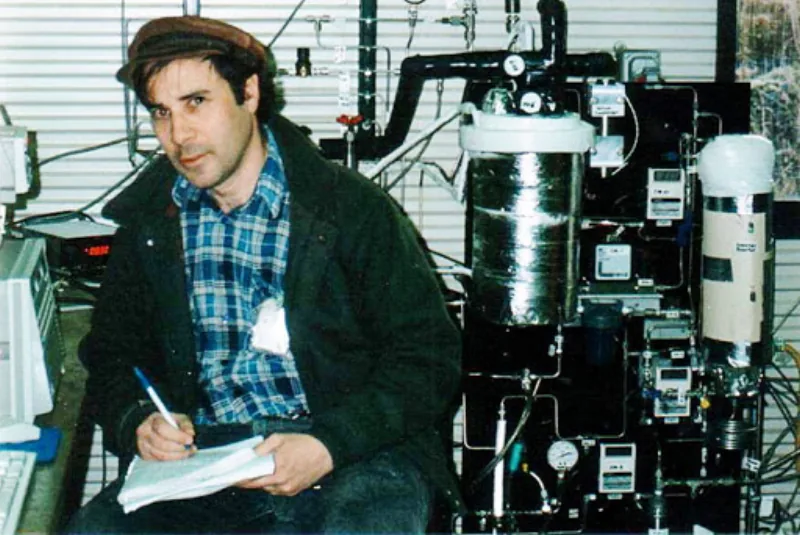
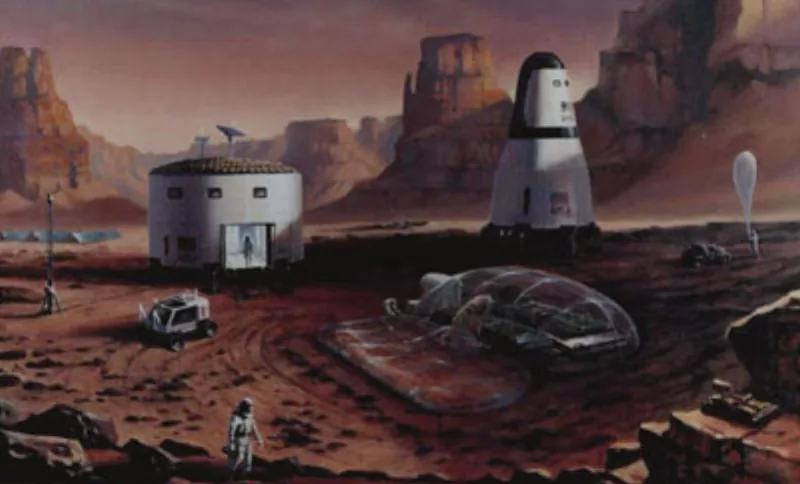
In 1990, Robert Zubrin and David Baker published a feasibility study detailing plans for a Mars journey, including construction of a basic base using planetary resources. Despite NASA's initial enthusiasm, the plan was shelved due to budgetary constraints.
Another three decades later, government-funded solar system colonization remains unlikely despite being technologically feasible. But individuals have begun exploring self-directed space exploration — most notably, Elon Musk with SpaceX.
The biggest obstacle remains funding. Mars missions and settlements are technologically feasible at approximately $10–30 billion — far less than many recent government expenditures. Meanwhile, Bitcoin demonstrated that decentralized systems can store and transfer enormous value without any central authority.
"We believe that Mars colonization is a moral imperative. For the sake of future generations, and out of gratitude for the achievements of earlier generations that gifted us this level of knowledge, we simply cannot let such an opportunity go to waste."
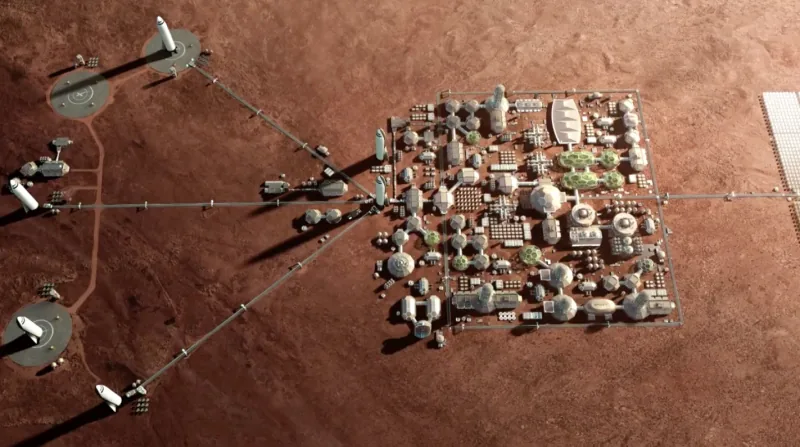
On a new planetary settlement, a peer-to-peer payment and value transfer system would be immediately useful. Early Martian settlers would need ownership tracking, resource allocation, and governance mechanisms. A scarce cryptocurrency allows developing Martian economies to operate freely — and the 4–24 minute communication delay with Earth makes dependency on terrestrial financial systems physically impossible.
The Visionaries
Who kickstarted the effort to decentralize humanity?
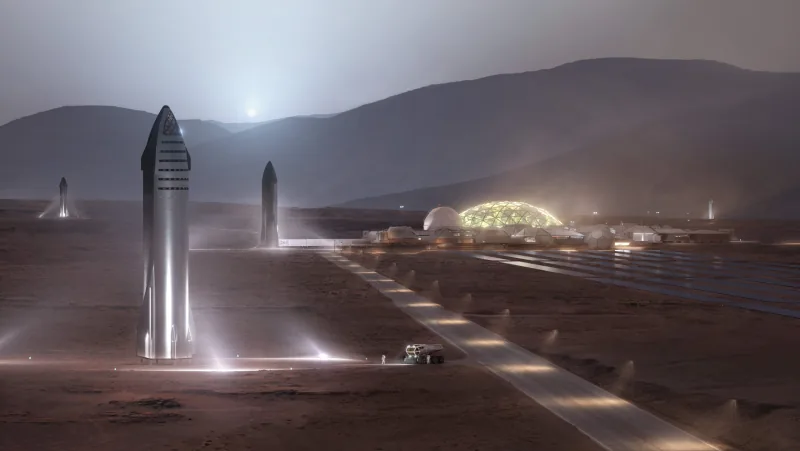
In 2002, Elon Musk founded SpaceX with a singular ambition: make humanity a multi-planetary species. What began with three failed Falcon 1 launches became the most transformative force in space exploration since Apollo. The development of Falcon 9, the first orbital-class reusable rocket, collapsed launch costs by an order of magnitude. Then came Starship — the fully reusable super heavy-lift vehicle designed specifically for Mars colonization, capable of carrying 100+ tons to the Martian surface.
In parallel, Dutch entrepreneur Bas Lansdorp launched Mars One in 2012 — a venture that captured global imagination with its audacious plan for a one-way Mars settlement mission. While Mars One ultimately faced insurmountable financial challenges and entered receivership in 2019, its cultural impact was profound: over 200,000 people applied to be among the first settlers. Mars One also became an early Marscoin holder, accumulating 500,000 MARS — holdings that were ultimately transferred to The Mars Society, ensuring those resources continued to serve the mission.
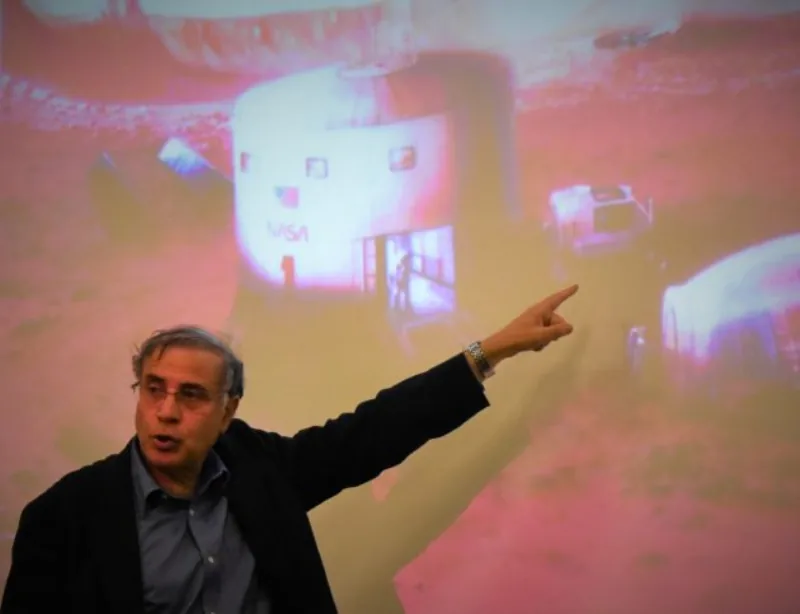
Robert Zubrin, through The Mars Society, has spent over two decades building the intellectual and organizational infrastructure for Mars settlement — from the Mars Desert Research Station in Utah to the Flashline Mars Arctic Research Station in Canada. His advocacy has inspired a generation of scientists, engineers, and entrepreneurs, including the founders of Marscoin.
"Most likely the form of government on Mars would be a direct democracy." — Elon Musk
These visionaries share a common understanding: Mars colonization is not a question of if but when. And when it happens, the settlers will need financial and governance infrastructure that is independent, resilient, and democratic. That's what Marscoin is building — today.
The Solution:
Marscoin
By establishing Marscoin ahead of time and donating initial holdings to The Mars Society — one of the largest international space advocacy organizations — mining and usage begin on Earth until the settlement is established.
Increased Marscoin adoption increases Mars colonization funding. As a Bitcoin alternative designed specifically for Mars, Marscoin grows in purchasing power alongside the credibility and progress of the Mars settlement mission. By utilizing and acquiring Marscoin, individuals participate in what may be the largest collaborative space funding experiment ever attempted.
When SpaceX Starship heads to Mars, volunteering colonists could carry the entire civilization's infrastructure in their pocket — transferring a copy of the blockchain and establishing the first mining node on another planet. The deflationary supply cap creates time-based scarcity, increasing value before Mars relocation and funding the non-profit organizations that accelerate settlement.
On Mars, early colonists continue mining. Derived from Litecoin, Marscoin's 2-minute confirmation times and Scrypt hashing algorithm provide convenience and security. No expensive mining machinery is required — maintaining network operation with general-purpose hardware.
Marscoin on Mars — Future of Prosperity & Progress
Everyone who downloads the Marscoin client, starts mining, and begins using it will have a stake in any future growth of a Martian economy in correlation to their early level of involvement. With the privacy and anonymity of cryptocurrencies, this participation can easily be transferred to future generations on Mars.
Once the first crewed SpaceX Starship heads towards Mars, a copy of the blockchain could be transferred by a volunteering Martian colonist and set up as the first mining node on another planet. The deflationary cap on the number of issued coins — the ability to reserve your "Kickstarter spot" on the use of Marscoin here on Earth — will lead to time-based scarcity, increasing the value of Marscoin prior to the move and thus increasing the funding available to early non-profit organizations and the speed with which the settlement can become reality.
On Mars, proposals exist that could add extra layers of security to prevent possible Earth-side interference with the blockchain — due to the distance, it is relatively straightforward to protect Marscoin from Earth-based attacks. Eventually, we can envision exchanges that allow conversion between Bitcoin ("Earthcoin") and Marscoin on both planets.
"Marscoin is a project that involves a high amount of risk — it's a labor of love and a global experiment in distributed collaboration for space colonization. We believe that network effects make it nearly impossible for other coins beside Bitcoin to become global reserve currency networks, but are very serious in our efforts to make Marscoin the first cryptocurrency network on Mars."
Take a look at our roadmap and explore the Academy for deep dives into every technical design decision.
The Promise of Mars
Robert Zubrin makes the case for why humanity must become a multi-planetary species — and how we can start now.

The First Public Presentation of Marscoin
The very first public introduction of the Marscoin project in 2014 — before the Mars Society convention, before the trademark, before twelve years of building. Where it all began.

Marscoin at the Mars Society Convention
Later that year — the presentation that introduced Marscoin to the Mars Society community at the International Convention.

The Mars Underground
The award-winning documentary that tells the story of Robert Zubrin's relentless campaign to get humans to Mars. From the origins of Mars Direct to the founding of The Mars Society — this is the movement that inspired Marscoin.
"The greatest adventure awaiting us — and the reason we must pursue it with everything we have."

Two Tracks, One Convergence
The history of space exploration and the history of computation have been running in parallel for decades. Marscoin is where they converge.
The Sputnik Moment
Sputnik's launch marks the dawn of the space age, inspiring global satellite and space exploration programs.
Invention of the Integrated Circuit
The IC sparks an electronics revolution, enabling the miniaturization that will ultimately put computers on Mars.
Landing on the Moon
Apollo 11 proves that humans can reach other worlds — accelerating technological innovation across every field.
Public-Key Cryptography
Diffie and Hellman invent the cryptographic foundation that will enable digital currencies and secure communications.
Mars Direct Published
Zubrin and Baker prove Mars settlement is feasible with existing technology at ~$30B — a fraction of Apollo's cost.
Mars Society Founded
Robert Zubrin establishes The Mars Society in Boulder, CO — the world's largest Mars advocacy organization.
B-Money & Bit Gold
Wei Dai and Nick Szabo propose decentralized digital currency systems, laying theoretical groundwork for Bitcoin.
SpaceX Founded
Elon Musk founds SpaceX with the explicit goal of making humanity multi-planetary. Three Falcon 1 failures follow.
Hashcash & RPOW
Adam Back's Hashcash and Hal Finney's Reusable Proof of Work advance the practical mechanics of digital scarcity.
Birth of Bitcoin
Satoshi Nakamoto launches Bitcoin — proving that trustless, decentralized value transfer works. The financial tool for a new world exists.
Launch of Marscoin
The two tracks converge. Marscoin launches as "Bitcoin for Mars" — a cryptocurrency purpose-built for interplanetary settlement. 500,000 MARS donated to The Mars Society.
Reusable Rockets
SpaceX lands Falcon 9 boosters, transforming spaceflight economics. Launch costs drop by an order of magnitude.
Starship Unveiled
SpaceX reveals Starship — the fully reusable vehicle designed for Mars colonization, capable of 100+ ton payloads.
Martian Republic Launched
The Martian Republic whitepaper outlines blockchain-based self-governance for Mars — democratic, decentralized, auditable.
Starship Orbital Flight
Starship completes its first successful orbital test — a giant leap toward Mars colonization becoming reality.
ASERT & Martian Republic App
Marscoin adopts ASERT difficulty algorithm. Martian Republic launches on iOS — governance goes mobile.
The People
Lennart Lopin
Founder & Lead DeveloperCreator of Marscoin (2014). Software architect, Mars Society member since 2013, and advocate for interplanetary decentralization. Author of the Marscoin whitepaper. Registered the Marscoin™ trademark with the USPTO in 2023.
James Burk
Co-Founder & Mars Society DirectorDirector at The Mars Society and co-author of the Marscoin whitepaper. Co-leads the annual Marscoin Expo and serves as the bridge between the Mars advocacy community and the Marscoin ecosystem.
Philipp Puaschunder
Research CollaboratorAustrian mathematician (MNS, University of Vienna) and co-author of the Marscoin whitepaper. His work bridges pure mathematics, information theory, and applied cryptographic finance.
Jaka Ažman
Community Advocate & Mars GamingCommunity leader and founder of J&A Marsian. Drives worldwide Marscoin outreach, marketing, and adoption. Building Mars Gaming to inspire youth: turning gamers into engineers and astronauts. Regular Marscoin Expo speaker and tireless ecosystem advocate.
Primož Novak
Marketing & OutreachCo-developed the ongoing Marscoin marketing campaign with Jaka Ažman, focused on raising awareness and adoption among potential Mars colonists and space enthusiasts.
Nicolò Evangelista
Community Moderator & DevelopmentSupport team member for Marscoin since 2021. Passionate about space, Mars, computers, aerospace technology, and cryptocurrencies. Supports the community by helping new members, creating graphics and tutorial videos, reaching out to exchanges, and contributing ideas while working closely with the Marscoin creators to grow the ecosystem.
Philipp Pelka
Community Contributor & Strategic ConceptsMarscoin member supporting marketing and outreach. Proposed a reflection-based donation model that automatically allocates a share of each transaction to vetted Mars projects, governed transparently via the Martian Republic platform.
Nathan Anderson
Community Contributor & Aerospace EnthusiastHobby Aerospace Engineer, Mars colonization nerd, Long Time Marscoin Enthusiast, Information Technology retailer and repairer from Australia.
Ronald Shumway
Aerospace Advisor & Community Leader41-year aerospace veteran specializing in launch services and International Space Station operations. USMC Aircrew — first CH-53E squadron, 800+ combat flight hours, awarded the Air Medal by the President for Beirut operations (1984). Foundational Marscoin supporter since 2014 and passionate advocate for decentralized space exploration and Mars colonization.
Kenneth Shortrede
ByteVault IntegrationLed the integration of Marscoin into ByteFederal's ByteVault mobile platform, expanding access across iOS and Android.
Sebastian Fabara
Martian Republic DevelopmentContributed to the Martian Republic wallet and governance application development.
A Global, Open-Source Community
Marscoin is built by an international community of developers, researchers, designers, and Mars enthusiasts spanning the United States, Europe, South America, and beyond. Many are also members of The Mars Society. The project is fully open-source under the MIT License — contributions are welcome.
The Marscoin
Foundation
The Marscoin Foundation LLC is a Florida-based entity established in July 2014 to steward the development, community growth, and research initiatives of the Marscoin ecosystem.
Marscoin Foundation LLC
159 Explorer Drive, Osprey, FL 34229
EIN: 47-3825832
Trademark: USPTO SN 90720391
Certificate: #7,227,237
MCJEbgisZAqG3BiCcdp73b439UzkAYg2YQ
Bibliography
- Zubrin, Robert; Wagner, Richard; Clarke, Arthur C. (2011). The Case for Mars. Free Press. ISBN 0684835509.
- Founding Declaration of the Mars Society (1998).
- Nakamoto, Satoshi. "Bitcoin: A Peer-to-Peer Electronic Cash System" (2008).
- Lopin, Lennart; Burk, James; Puaschunder, Philipp. "Marscoin: Trustless-Ledger Technology Implications for a Martian Society" (2014).
- Lopin, Lennart; Burk, James. "The Martian Republic: A Blockchain-Based, Decentralized and Auditable P2P Governance System" (2021).
- Lopin, Lennart. "Planetary Hash-War Protection as an Example of Decentralized Licensing Systems." Mars Society International Conference, Tempe, AZ (2023).
- Ammous, Saifedean. The Bitcoin Standard. Wiley (2018).
- Image credits: Bryan Versteeg. Logo design: Tymen Muller.